Ohio is letting the oil and gas industry put more toxic waste underground despite community concerns — even as the state defers to local opponents of clean energy.
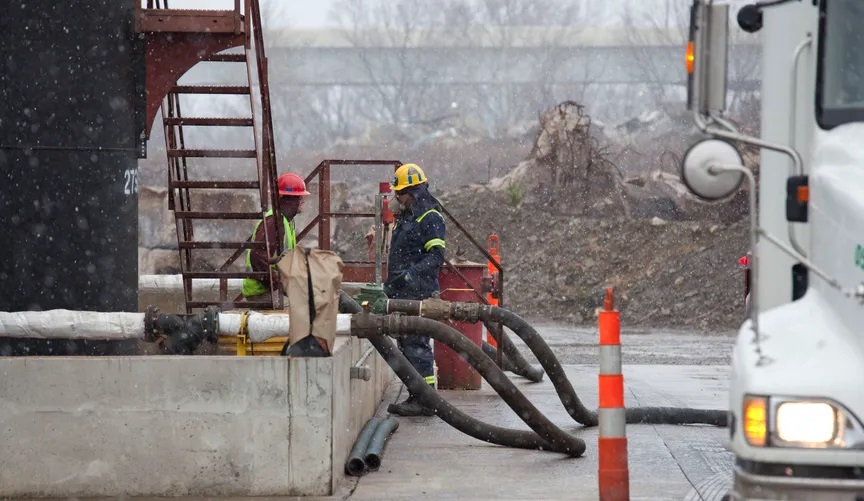
In the far reaches of Appalachian Ohio, DeepRock Disposal Solutions and other companies pump salty, hazardous waste from oil and gas fracking thousands of feet underground at high pressure. Last year, the state gave DeepRock permits to drill two more injection wells for pumping such waste underground. The new wells are slated for rural Washington County, which sits on Ohio’s southeast border.
The state’s approval has drawn fierce opposition from surrounding community members and local governments that fear waste from the wells could escape and pollute their drinking water supply. Leaks have happened before, including from some DeepRock wells. But these opponents haven’t been able to stop the company’s latest drilling plans.
This lack of local authority highlights an unfair discrepancy in Ohio, according to legal experts and clean energy advocates: While state law allows counties, townships, and disgruntled residents’ groups to delay or even doom many solar and wind developments, it blocks almost all local decision-making power over fossil fuel endeavors.
The difference between how Ohio law deals with renewables and petroleum “is night and day,” said Heidi Gorovitz Robertson, a professor at Cleveland State University College of Law.
On one hand, state law gives the Ohio Department of Natural Resources “sole and exclusive authority” to permit oil and gas activities. “So the local governments are cut out entirely,” Robertson explained, noting a 2015 Ohio Supreme Court decision that held that the state’s comprehensive regulation of oil and gas activities preempts even city zoning ordinances that would otherwise restrict that work.
On the other hand, a 2021 law lets counties ban new solar and wind development for most of their territory. Even for “grandfathered” projects that are technically exempt from such bans, the Ohio Power Siting Board has used opposition from local governments as grounds for finding such developments were not in the “public interest.”
“What you have looks like total inconsistency” when it comes to deciding which energy projects should go where, Robertson said.
That has serious implications for the energy transition: It holds back the projects that would slash planet-warming and health-harming pollution while further entrenching the lead that the oil and gas industry has in Ohio’s electricity sector.
Ohio also treats renewables differently than it does fossil fuel projects when it comes to letting the community participate in permitting decisions. The state lets disgruntled residents intervene as official parties in wind- and solar-permitting cases, which allows those individuals to appeal permit approvals to the Ohio Supreme Court. Yet residents cannot intervene or appeal in cases about where oil and gas activities go.
Advocacy groups such as the Buckeye Environmental Network say this imbalance is making communities like Washington County, where DeepRock plans to inject more fracking waste, less safe.
Fracking — a drilling technique to extract fossil fuels from rocks thousands of feet deep — produces millions of barrels of waste per year. Regular wastewater treatment plants can’t handle those super-salty fluids, which can contain heavy metals, radioactive chemicals, and company “trade secret” compounds. That’s why the waste is typically disposed of in deep wells.
Ohio had more than 200 active fracking-waste injection wells as of late 2024, with several already in Washington County.
Read more By Kathiann M. Kowalski